
Most of us know the feeling. We sit in meditation, breathe deeply, and touch something vast and peaceful. Then we stand up, open our inbox, and within minutes it is gone. The calm we felt on the cushion seems to belong to another world entirely.
Experiencing higher states of consciousness in our private space is beneficial. But if those states remain confined to the yoga studio or the meditation room, the fruits of our practice are greatly diminished. The real question is not how to reach these states, but how to live in them.
Meditation that doesn’t end
Of the many techniques I have learned over the years, breath awareness and mindfulness have been the most effective, and the simplest, ways to stay grounded through the stress of a working day.
I once attended a day-long mindfulness workshop with Shamash Alidina, author of Mindfulness for Dummies, who taught us how to remain in a meditative state throughout the day. The workshop was organized around the five senses, and we were retrained to use them as an embodied meditation practice.
One exercise has stayed with me. While walking, eating, or talking, we learned to divide our attention among several subtasks. When speaking, we would reserve about 20% of our attention for our breath, breathing consciously; another 20% for our body, feeling the fabric against our skin or our feet pressing into the floor; and the rest for speaking consciously.
The result surprised me. I felt completely absorbed in the task, and at the same time completely present. Meditation was no longer something I did; it became the way I did everything. Eckhart Tolle’s The Power of Now offers similar practices for anyone who wants to explore this embodied way of living.
What closes the door
In my reflections, I have come to believe that we restrict the flow of our consciousness and psychic being into our mind, body, and vital being whenever we fall into anger, fear, or disappointment.
An enlightened person would not be angry, for they know they do not control everything.
An enlightened person would not be fearful, for they realize that their soul is an eternal, pure self that cannot be harmed.
An enlightened person would not be disappointed, for they do not attach expectations to external outcomes.
Consciousness exists in beingness. It simply is. If we aspire to that state, we must learn to experience that is-ness.
As Shakespeare’s Hamlet puts it: “There is nothing either good or bad, but thinking makes it so.” It is not events themselves but the way we translate them into our framework of understanding that determines their effect on our thoughts and emotions.
When pain becomes a path
Perhaps the most radical examples of this come from the world’s great spiritual traditions, which have transformed even bodily pain into a path of salvation and growth:
Christianity speaks of redemptive suffering, embodied in the crucifixion of Jesus.
Judaism describes yissurim shel ahavah, the “afflictions of love,” suffering sent to refine the soul.
St. John of the Cross wrote of the dark night of the soul, a painful purification that precedes union with God.
Shamanic traditions honour the wounded healer, who is initiated through illness or crisis and so gains the power to heal others, an idea Carl Jung later carried into psychology.
In each case, a revolutionary reframing turns even gross physical pain into a force capable of transforming a person into one of the greatest forces of nature.
Rumi’s take
Rumi expressed the same insight seven centuries ago in his Masnavi:
هر کجا دردی، دوا آنجا رود
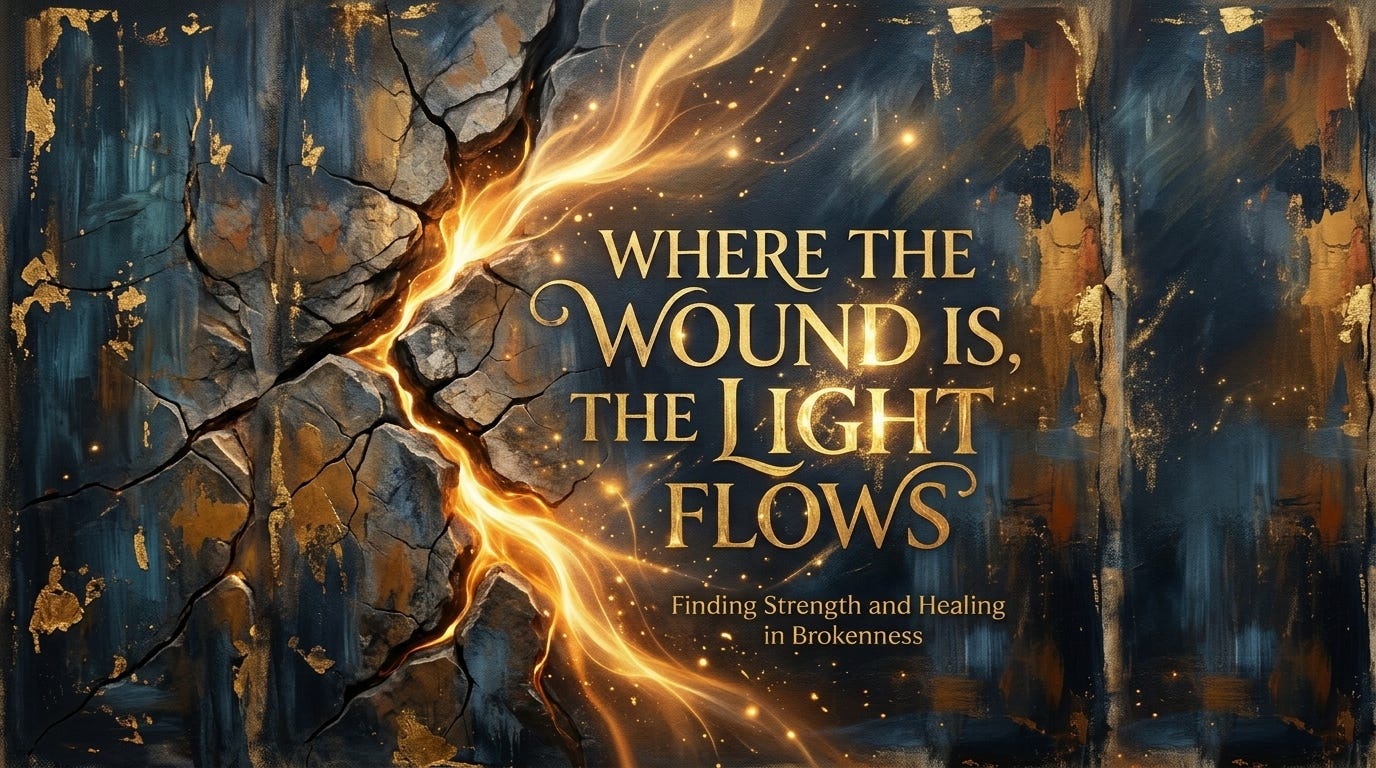
Har kojā dardī, davā ānjā ravadWherever there is pain, there the remedy flows.
A few lines later, he adds:
Seek less for water; seek instead a thirst,
and water will spring forth from above and below.
Our pain, our longing, and our thirst are not obstacles on the path. They are what draw the remedy toward us.
Sources and further reading
Alidina, S. (2010). Mindfulness for Dummies. Wiley.
Eliade, M. (1964). Shamanism: Archaic Techniques of Ecstasy. Princeton University Press.
John Paul II. (1984). Salvifici Doloris [Apostolic letter on the Christian meaning of human suffering].
Jung, C. G. (1966). The Practice of Psychotherapy (Collected Works, Vol. 16). Princeton University Press.
Rumi, J. Masnavi, Book 3, v. 3210 (trans. R. A. Nicholson).
Shakespeare, W. Hamlet, Act 2, Scene 2.
St. John of the Cross. Dark Night of the Soul (trans. E. A. Peers).
Babylonian Talmud, Berakhot 5a.
Tolle, E. (1999). The Power of Now. New World Library.