
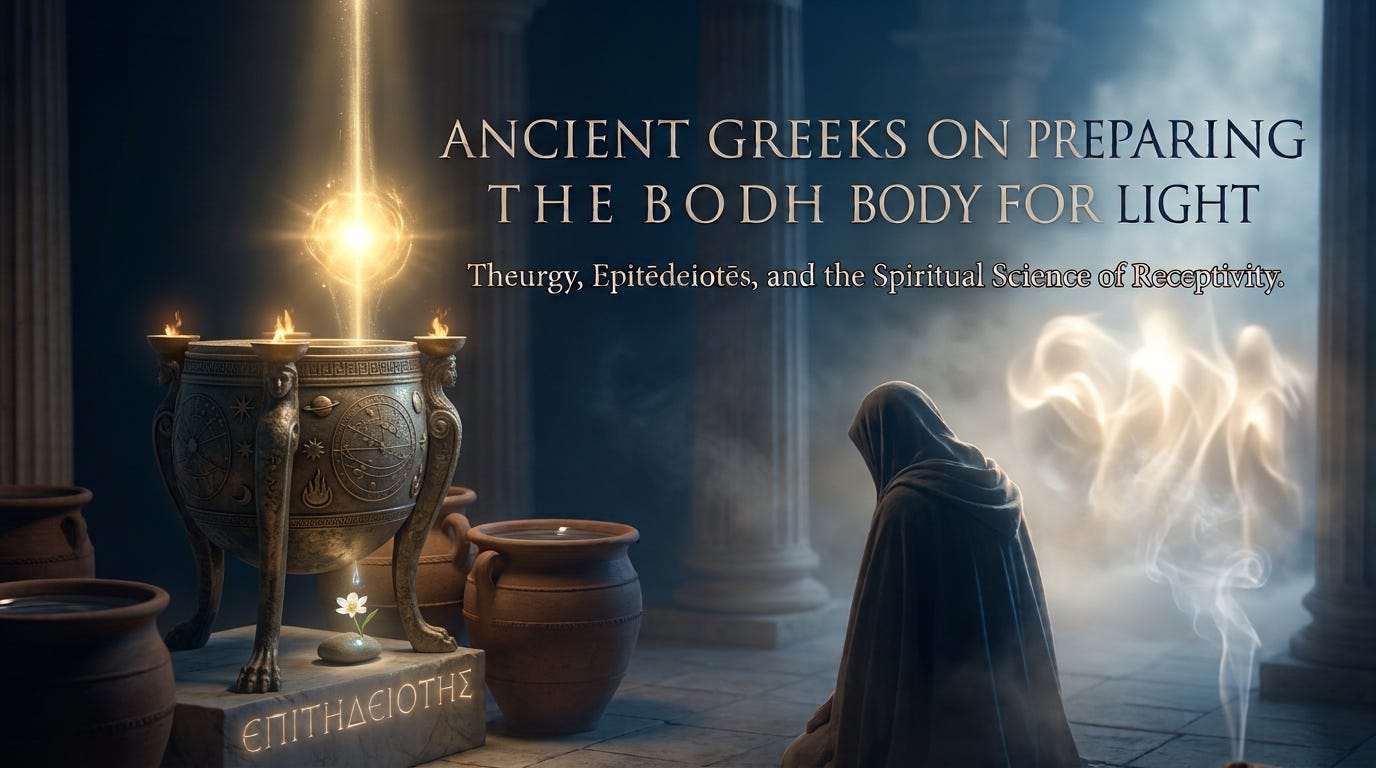
As theurgy developed, primarily through the works of Iamblichus, the soul’s descent into matter, or vice versa, was carefully studied. The Greeks attempted to understand spirituality as a logical science. How did their gods and deities descend into matter, animating and possessing it, so that communion with the gods could take place? What were the factors involved? And how could one connect to the gods?
As theurgy developed, it identified sunthēmata as tokens and objects that could be used in ritual to invoke the gods for communion. One method was to place plants, stones, and animal offerings into hollow statues. Then, during rituals, specific sounds and practices were used to invoke a specific deity to possess the statue. Once the deity had manifested in the statue, the devout followers of that deity could pray to and worship it (having a more spiritual experience), as the statue was considered to be animated through the rituals. But how would one judge the suitability and capacity of the statue or sunthēmata to receive the divine?
The capacity of an object, or even the human body, to receive the divine was called epitēdeiotēs. Iamblichus developed this concept in detail. The difference in mystical experiences due to the receptacle’s fitness or aptitude to receive a spiritual form was termed epitēdeiotēs (Shaw, 2014, p. 135). It was compared to the actualization of fire in dry wood. The purity of a human soul would be a major factor determining the manifestation of the deity in the human body. Iamblichus reasoned that this was why ritual alone was not adequate to enact the union of the human body with the gods. The epitēdeiotēs of the human body had to be prepared first through the processes of purification. We see this today in almost every religion through the practice of physical and ritual purification before worship: for example, wuḍūʾ in Islam, netilat yadayim in Judaism, ācamana in Hinduism, and temizu in Shinto. However, the body is also purified through the avoidance of alcohol, drugs, and sexual intercourse, and by following a strict diet. Therefore, the intensity and duration of the possession depended on the purity of the receptacle.
Another factor on which it depended was sympatheia. Sympathy and correspondence were the natural sympathies that some tokens had with specific deities. For instance, some plants, stones, animals, and scents worked well with the rituals of certain deities. However, there was also an innate ability in each person that determined how much of the divine they could receive. This natural disposition depended on the person’s natural constitution, or what we would today call DNA.
Seeing how the Greeks understood spirituality, one can easily relate this to our own spiritual practices today. Whether through ablutions before prayer, fasting, or abstinence, we are still preparing the receptacle, consciously or not, so that the divine may find a fitting place to dwell. In many ways, Iamblichus’s greatest insight was that union with the spirit depends not only on what we do in ritual, but on what we ourselves have to become.
Reference
Shaw, G. (2014). Theurgy and the soul: The Neoplatonism of Iamblichus (2nd ed.). Angelico Press.