
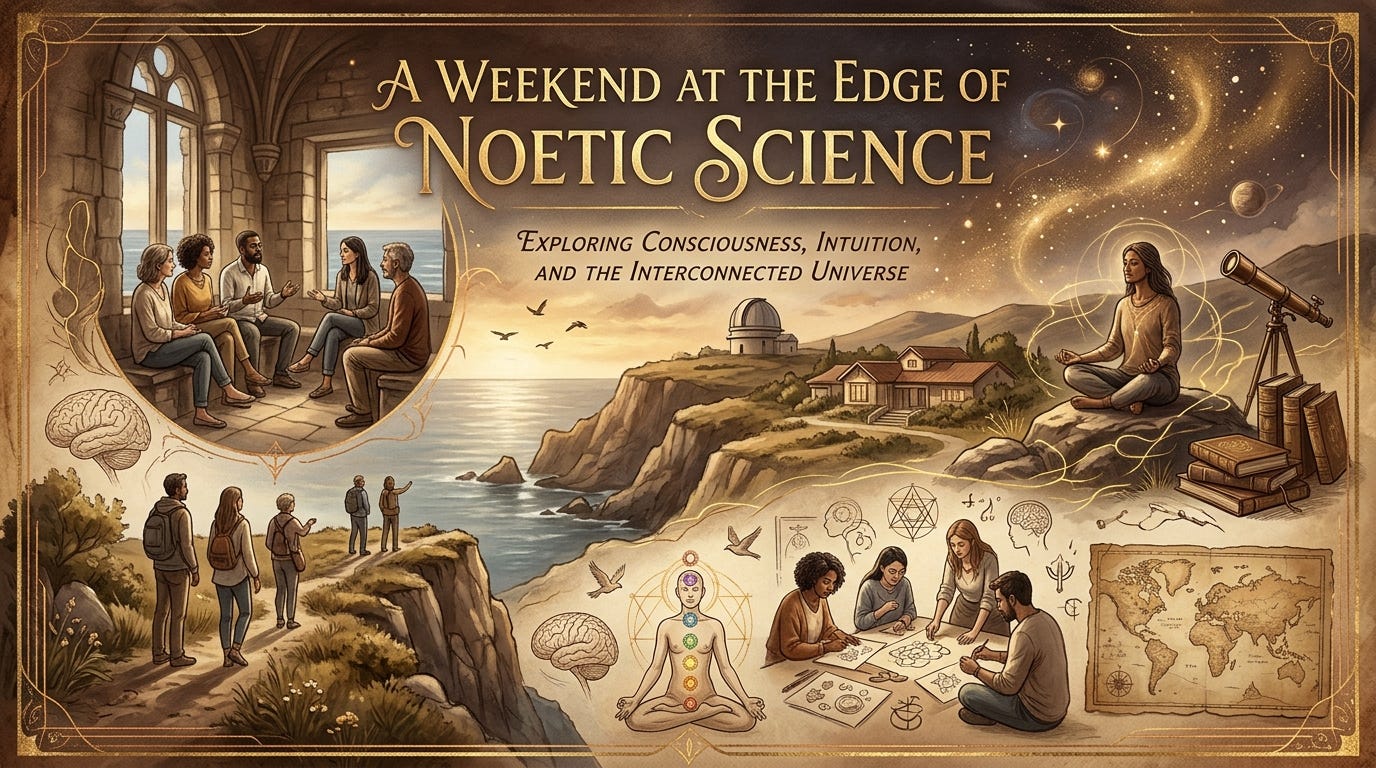
Fast paced lives of the modern-era has pushed humankind into a frenzy of repetitive tasks, one after the other. Stuck in the whirlpool of routine, it is seldom that one gets the chance to step back and take a break. Sometimes an intervention, interruption, or respite may be what is needed to rekindle the flame of curiosity and realign one with their true path. This CIHS academic retreat offered just that — a chance to wind down, connect with people on a similar path, and most importantly, learn.
There aren’t many institutes out there looking to bridge the gap between the disciplines of spirituality and science. California Institute of Human Science, established in 1992, embodies the vision of its founder Dr. Hiroshi Motoyama, a mystic and a scientist, among other things. What others saw as conflicting Dr. Motoyama saw as complimentary. He crystallized his lifelong practice of spirituality by inventing an electronic device for identifying meridians and chakras. Both presumed, according to ancient texts, to be present in the subtle energy body.
The institute is again coming at the forefront of noetic science research by conducting a multiyear study headed by Dr. Sean Esbjorn-Hargens. Worldwide Initiative for Super Experiencer Research (WISER) study aims to survey in excess of a thousand participants who have had multiple types of paranormal experiences. Once super experiencers are recorded their unique bioenergy markers will be identified to answer how is a super experiencer different from someone who does not have paranormal experiencers. You can become part of the WISER study by clicking on the link and filling out a form. Apart from various guided meditations and lectures, the event was also attended by the Dr. Thomas Brophy, president of the Institute of Noetic Sciences (IONS). Dr. Brophy offered the attendees an overview of current state of affairs and future direction of noetic and consciousness research.
The retreat culminated in a celebration of academic achievement as the event drew to a close with a graduation ceremony, marking a milestone for the newest cohort of scholars to emerge from CIHS. The ceremony was a fitting close to a gathering steeped in inquiry and inspiration, a reminder that the pursuit of knowledge carries its own quiet dignity. As graduates walked away with their degrees in hand, they carried with them a deepened commitment to a field that dares to ask the questions most institutions have yet to learn how to ask.